Experience research & strategy

If your users feel understood, they’re more likely to convert.

They have a clear path to their goal. Engage with your onboarding flow without friction and in the way it was designed. Find answers before they need to pick up the phone to ask a question your product was supposed to answer. When that happens, it’s because they feel like your product was designed with them in mind.

That’s where experience strategy comes in. And that’s where we come in. We turn user insight into product clarity.

Why this work matters now

Your users don’t compare your product to your last release. They compare it to the best experience they’ve had today. Expectations are rising, and tolerance is shrinking. Every laggy screen, buried button, or unclear flow becomes a moment of friction.

For companies in growth mode, scaling operations, migrating platforms, or rethinking their brand, these moments add up. They don’t just slow people down. They cost you.

That’s why strategy needs to happen before design. Not after.

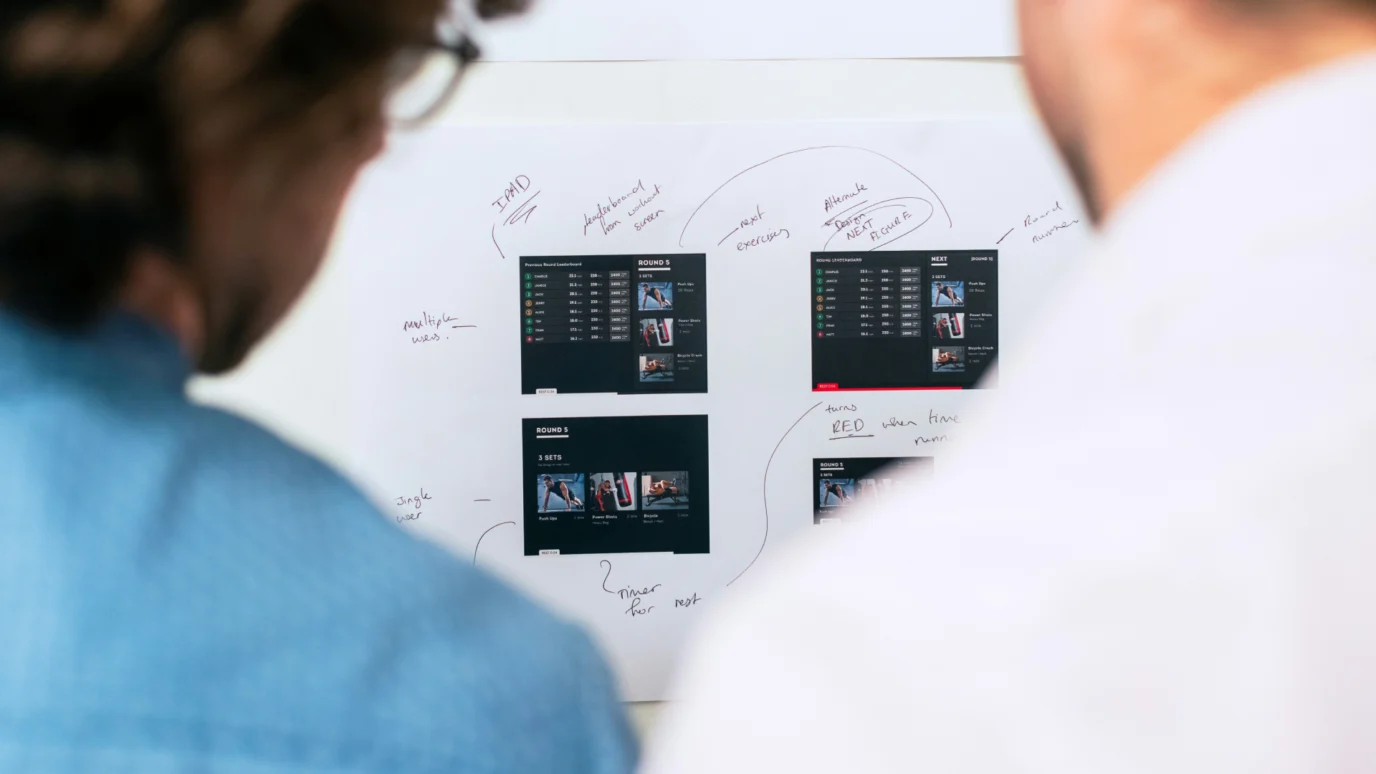
UX research and strategy session: two designers collaborating on wireframes, user interface (UI) screens, and handwritten feedback during a product design review.

What happens when you skip strategy

You’ve likely seen it before:

  • Products shaped around internal logic, not user needs
  • Internal tools that get abandoned in favor of spreadsheets
  • User journeys with quiet, but expensive drop-off points
  • Accessibility gaps flagged too late
  • UX decisions based on opinion, not evidence

Every one of those slows your team down. And none of them fix themselves. This makes a solidified user experience design strategy all the more important for success.

Product design team collaborating on a laptop during a UX strategy meeting, pointing at the screen and keyboard to review user experience (UX/UI) design or research data.

Codal’s perspective on experience strategy

We don’t treat design as decoration. It’s the connection between your business goals and the people you’re building for. To get it right, we blend qualitative insight, what your users think, feel, and say, with quantitative data, what they actually do. That mix gives us a full picture of the experience. Our job is to bring those insights into your strategy, so every decision is grounded in real user needs and focused on delivering real outcomes.

Our end-to-end approach empowers you to gather and interpret data on your users’ unmet needs and competitors’ movements, so you can create quality customer experience frameworks that work.

User research icon

User research

We speak with your users. We observe them in context. Not just what they say, but how they behave when no one’s guiding them. The result is a grounded view of what’s working, what’s not, and why it matters. We uncover patterns, pain points, and unmet needs that shape how they purchase your product. Because knowing what your users actually do is far more useful than guessing what they want. The result? UX research and insight that cuts through assumptions. We give you clarity on what to fix and improve.

Usability testing icon

Usability testing

Before you launch anything, you need to know whether it works for real people, in real scenarios. We put your product prototype in front of users and watch what happens. No leading questions. No filler. Just raw, honest interaction that reveals what’s intuitive, what’s confusing, and what needs to change. We identify the issues causing friction and prioritize them based on impact, not opinion. We provide a clear view of what’s working, what’s breaking your experience, and how to solve it. Because preventable problems are the most expensive ones to fix, especially once they’re live.

Persona development icon

Persona development

We translate what we’ve learned into clear user archetypes that reflect motivations, behaviors and needs. They’re tools your product, design, and marketing teams can actually use to make informed decisions. Each persona is rooted in behavior. We use empathy mapping, goal alignment and pain point analysis to ensure these profiles provide your team with enough knowledge to build with purpose and that everyone is aligned.

Journey mapping icon

Journey mapping

We trace your users’ path from start to finish. Not the happy path on paper, the one they actually take. We highlight where they stall, where they switch channels, and where you’re missing a moment to help. Through visual mapping, we call out friction points, highlight where opportunities are being lost and provide clear direction for improving the end user experience. The result is a clearer understanding of what needs fixing and what could be turned into a competitive advantage.

Flow mapping icon

Flow mapping

Some user paths are critical: checkout flows, onboarding, internal tools. We break those flows down step by step, from a user’s perspective, and show you where things go off track. Sometimes it’s a broken interaction. Sometimes it’s just a confusing word. We catch both. We visualize the current-state, flag friction points, and build future flow diagrams around better logic and fewer steps. You streamline your most important flows. Users move faster, teams get fewer complaints, and conversion improves.

Competitive & comparative research icon

Competitive & comparative research

You know what your competitors are doing, but do you know what they’re doing better? Or worse? Or what you could be doing that they haven’t even thought of yet? Our UX design research methods look across your industry and beyond it to find opportunities to differentiate. We benchmark what matters, analyze trends and highlight ways you can differentiate. Providing you with sharper positioning and a clearer path to standing out in a crowded market.

UX auditing icon

UX auditing

We take a close look at your digital experience, screen by screen. Instead of relying on assumptions, we use established heuristics like Nielsen’s usability heuristics and accessibility guidelines alongside years of practical know-how to identify what’s helping users and what’s quietly getting in their way. Instead of assumptions, we call out problem areas, provide clear priorities and a roadmap that separates the quick wins from the deeper structural work. Because no one wants to learn something’s broken from their customers.

Experience visioning icon

Experience visioning

Once we understand what’s happening today, we help you see what’s possible tomorrow. This isn’t a mood board. It’s a vision grounded in your users’ reality and your business’s potential. We map future-state journeys, sketch out key interactions, and build concept narratives that help teams align and plan. We provide the tools to start turning vision into actual product. Because you can’t build a better experience until you define what “better” looks like.

Content strategy icon

Content strategy

We get into the details of what your users read, scan, and ignore. We help you say the right thing, in the right way, at the right time, and organize it all so people can actually find it. From navigation labels to onboarding copy, we help you shape a content experience that’s clear, consistent, and genuinely useful. That means aligning your messaging to user needs, structuring information so people can find what they’re looking for, and building systems that scale with your team. Because when content is treated like part of the product (not an afterthought), everything works better.

How our process works

1

Research

We don’t guess. Our UX research involves talking to your users, watching them interact with your product, and uncovering what they’re actually trying to do. It’s about real context, not assumptions.

2

Insight

Next, we sift through everything we’ve seen and heard to spot the patterns. Where are users getting stuck? What are they trying to solve? We connect the dots between their needs and your business goals.

3

Strategy

Once we’ve got the full story, we don’t just hand over a list, we help you prioritize. We figure out what’s working well, what’s holding things back, and what might need a fresh approach. Every recommendation in your UX strategy ties back to real insight, not gut feel.

4

Action

This isn’t a handoff and goodbye. We help you carry that strategy through into design, development, and real results. We can lead the work or support your internal teams. Either way, we stay in it with you.

Why teams choose Codal

We’re the ones who thrive in complex challenges, the places where user needs, business goals, and system realities don’t always line up.

We’ve worked inside regulated industries, complex ecosystems, and enterprise platforms with more than a few moving parts. That means we know how to spot the friction and untangle it.

We don’t just clean up workflows, we clarify them. We make them usable, logical, and easier to scale.

And from day one, we’re thinking beyond launch. Whether you’re growing fast or planning for long-term change, we help you build systems that flex as you grow.

Our teams have worked across healthcare, finance, eCommerce, and B2B, so we know what it takes to deliver digital experiences that actually perform.

Professional business meeting or user interview in a modern office, showing two men seated across a table, focusing on collaboration and qualitative research.

Let's make your user experience your growth engine.

You don't always get a second chance to get it right. If your users are hitting friction now, they're already forming opinions and looking elsewhere. Let's fix that before it costs you more.