Preparing your Shopify store for agent commerce: Why product data is the new competitive advantage
Feb 5, 2026 10 min read Written by Jason Jackson

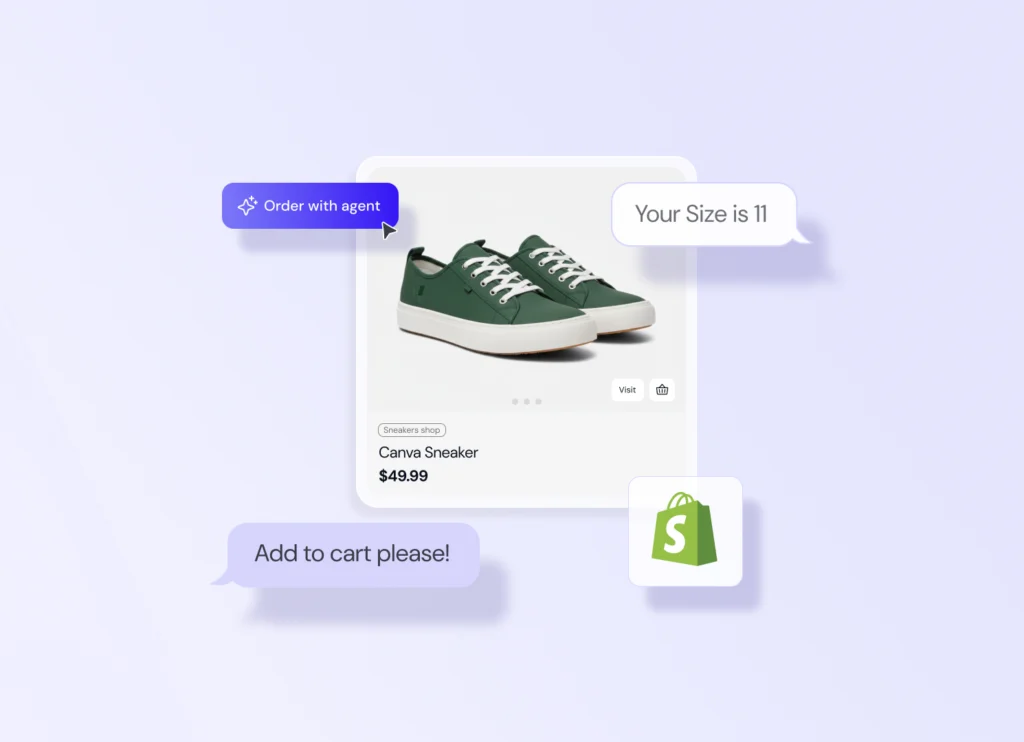
For years, eCommerce success was defined by rankings. Then, it was about conversion optimization. Now, we’re entering an era where AI agents, not humans, will increasingly discover, compare, and purchase products on behalf of consumers.
Google’s Universal Commerce Protocol (UCP), launched in January 2026, represents the most significant infrastructure shift in eCommerce since mobile. AI agents from Google, OpenAI, and others are building the capability to mediate purchase decisions at scale. McKinsey estimates $3-$5 trillion in global retail will flow through agent commerce by 2030. Forrester reports 33% of consumers are already willing to complete purchases via AI agents and that number is growing rapidly.
The question isn’t whether agent commerce will matter. It’s whether your store will be visible when it does.
Shopify co-developed UCP alongside Google, holding four of 12 Tech Council votes. This means UCP is becoming a native platform feature, not a custom engineering project. What once required an eight-week implementation now becomes a configuration toggle.
Here’s what you need to remember, though: Shopify handles the protocol layer. They don’t handle your product data.
When merchants opt in to UCP, their stores become either discoverable or invisible to AI agents based entirely on data quality. The technical barrier is disappearing. The only remaining competitive differentiator is how well your product information is structured for machine consumption.
The same structured data that improves your organic search performance today, will power your agent commerce visibility tomorrow. This convergence means investment in product data preparation delivers immediate ROI through traditional channels while positioning your store for the emerging agent economy.
| Traditional SEO value | Agent commerce value |
| FAQ content ranks for People Also Ask | AI agents retrieve Q&A pairs when users ask questions |
| Rich product attributes improve feed quality | Agents filter and select products by structured attributes |
| Schema markup earns rich snippets | Machine-readable data enables agent discovery |
| Long-tail content captures search demand | Conversational queries map to structured data |
The strategic insight is clear: you’re not betting on agent commerce adoption timelines. You’re doing SEO work that’s structured to also work for agents. The ROI case is today. The upside is tomorrow.
Most product data is optimized for humans. Marketing copy, lifestyle imagery, and persuasive descriptions work well for shoppers browsing your site. But AI agents don’t browse their query.
| Traditional approach | Agent-ready approach |
| “Best running shoes for flat feet” blog post | arch_support: “flat_feet” as queryable attribute |
| Marketing copy descriptions | Structured specs: materials, dimensions, compatibility |
| FAQ page accordions | JSON-structured Q&A pairs agents can retrieve |
| Star ratings (1-5) | Attribute-level ratings: comfort 4.5, durability 4.2 |
| Category navigation | Filterable product feeds with relationship data |
Simply put, agents need data they can parse, filter, and trust. Without structured attributes, relationship data, and retrievable Q&A content, your products risk invisibility in the next generation of commerce.
Product visibility in the agent commerce era follows a clear hierarchy. Each layer builds on the one below it.
1. Merchant Center health
Foundation nothing works without this. Feed errors, disapproved products, and data quality warnings must be resolved before anything else matters.
2. Product data completeness
The new ranking factor for agent selection. Gaps in product data lead directly to missed opportunities. Agents can’t recommend what they can’t understand.
3. Structured attributes
What agents query and filter against. Material composition, dimensions, compatibility, specifications these become the selection criteria when agents compare options.
4. Relationship data
Compatibility, substitutes, and accessories. When an agent needs to recommend alternatives or complete an outfit, relationship data determines whether your products surface.
5. Q&A content
Retrievable answers for agent conversations. When a user asks an agent about sizing, care instructions, or compatibility, structured Q&A content provides the answers.
6. Traditional SEO
Still essential additive, not replaced. Technical SEO foundations remain non-negotiable for human discovery while supporting machine readability.
Current state: low UCP adoption equals high visibility for early movers.
| Timeframe | Opportunity |
| Q1 – Q2 2026 | First-mover advantage prepared merchants dominate agent discovery |
| Q3 – Q4 2026 | Fast followers enter advantage narrows |
| 2027+ | Table stakes unprepared merchants invisible to agents |
Brands that invest in their product data foundations today will accumulate advantages that compound. The cost of waiting is invisibility when the channel scales.
To prepare your Shopify store for agent commerce, focus on these priorities:
Foundation phase
Enrichment phase
Activation phase
The same metrics that indicate traditional SEO health also signal agent commerce readiness.
| Metric | What it measures | Target |
| Merchant Center feed health score | Data quality foundation | 95%+ |
| Products approved/total | Feed coverage | 98%+ |
| Attribute completeness rate | Data richness | 80%+ of required fields |
| PAA/featured snippet capture | Q&A effectiveness | Increase from baseline |
| Organic traffic to product pages | Discovery | Increase from baseline |
As agent commerce attribution matures, additional metrics will emerge: UCP-Agent header tracking, conversions with no prior site visit, and revenue by agent source. The merchants who prepare now will have the data infrastructure to measure and optimize these channels from day one.
The convergence of SEO and agent commerce creates a unique opportunity: invest once, benefit twice. Product data enrichment, structured Q&A content, and feed optimization deliver immediate organic search improvements while positioning your store for the agent economy.
Whether you need a readiness audit to understand your current gaps or hands-on implementation to enrich your product catalog, Codal can help you prepare for both channels with a single, strategic investment.
Contact our team to assess your agent commerce readiness and build a product data strategy that works today and scales tomorrow.

Lead Technical SEO Strategist
Jason is a Lead Technical SEO Strategist at Codal, managing enterprise SEO strategy and implementation. He has over a decade of experience helping brands across industries, such as eCommerce, healthcare, and finance, achieve their digital growth goals.

Explore our latest expertise on innovation, design, and technology, or connect with us directly to see how we can help accelerate your digital transformation.